
Shock waves
Shin Splints: Why Your Shin Hurts When You Run and How to Treat It
Oct. 21, 2026 · 4 min ·
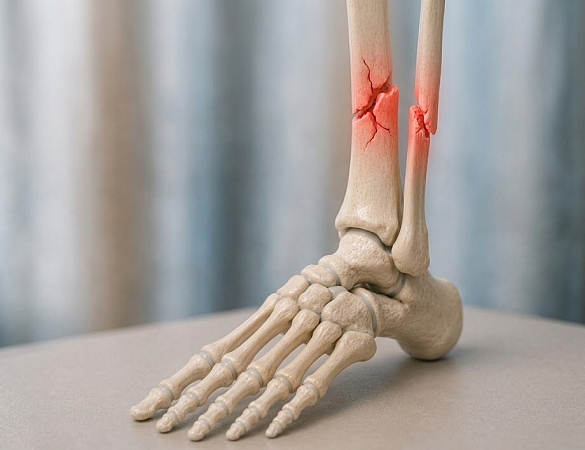
You started running, or suddenly increased your mileage, and a few weeks later you felt pain on the inner side of your shin. It is one of the most common injuries in runners, especially at the beginning or after a sudden change in training, and it has a name: shin splints, or tibial periostitis. The good news is that, well managed, it usually responds well. The bad news is that, if you ignore it and keep running the same way, it can drag on for a long time. Here we explain why it appears, how to tell it apart from something more serious like a stress fracture, and what to do to recover.
What Are Shin Splints?
Shin splints are an irritation of the area of the tibia where the leg muscles insert, caused by repeated overload. The more precise medical name is medial tibial stress syndrome, because the pain is located on the inner edge of the tibia.
Essentially it is a sign that the tibia and the tissues around it are taking more impact than they can absorb at that moment. It is not a serious injury in itself, but it is worth addressing early, because it shares its origin with more serious problems.
Symptoms
The typical pattern is fairly recognisable:
-
Pain on the inner edge of the shin, over a more or less broad area (not a single point).
-
Discomfort when starting to run, which sometimes improves with warming up and returns after activity.
-
Pain when pressing the area with the fingers along the bone.
At first the pain appears only with exercise. If the overload continues, it can start to be felt while walking or at rest too, and that is a sign to stop and get it checked.
Causes
Shin splints are an overuse injury. The factors that most often cause them are:
-
Increasing the load too quickly: more distance, more speed or more sessions in a short time.
-
Hard surfaces like asphalt.
-
Worn-out footwear or shoes unsuited to your gait.
-
Foot mechanics, such as marked pronation.
-
Running with muscles poorly prepared for the volume you are asking of them.
Shin Splints or Stress Fracture: Warning Signs
This distinction is the most important part of the article, because it completely changes what you need to do. Shin splints affect a broad area of the bone; a stress fracture is a crack at a specific point and needs more rest and, sometimes, specific treatment.
Suspect something more than shin splints if:
-
The pain is concentrated in a very localised point that you can pinpoint with a finger.
-
It hurts at rest or at night, not only when running.
-
The pain progressively worsens despite reducing the load.
In these cases a medical assessment is advisable and, probably, an imaging test (X-ray or MRI), because a stress fracture that continues to be forced can become complicated.
How to Heal Shin Splints
Treatment combines rest from impact and an orderly return to activity.
Relative Rest and a Progressive Return to Running
"Relative rest" does not mean the sofa: it means stopping what hurts (the impact of running) and maintaining fitness with impact-free activities, such as cycling or swimming. When the pain eases, you return to running gradually, increasing little by little and without rushing.
Exercises and Stretches
-
Stretching the calf muscles (gastrocnemius and soleus), which tend to be tight.
-
Progressive strengthening of the leg and foot so they absorb impact better.
-
Work on balance and control of the ankle.
It is best to start gently and without reproducing the pain.
Taping
Neuromuscular taping can provide some relief and a sense of support during the recovery phase, but it is a supporting measure: it does not replace rest from impact or the strengthening work.
Shockwave Therapy for Chronic Shin Splints
When shin splints become chronic and do not respond to the previous measures, shockwave therapy is an option to consider. According to the available evidence, it can help reduce pain and stimulate tissue recovery in persistent cases. We deliver this shockwave therapy treatment with STORZ MEDICAL equipment, always within a plan that includes correcting the cause (load, footwear, gait). You can see our approach in the orthopaedics section.
How to Prevent It
The best way not to relapse is to correct what caused the injury:
-
Increase the load gradually (the rule of adding a little each week is a good starting point).
-
Alternate surfaces and avoid overusing asphalt.
-
Check your footwear and replace it when it is worn out.
-
Include strength work for the leg and foot.
-
Respect your rest days.
When to See a Doctor
Ask for an assessment if the pain lasts more than two or three weeks, if it appears at rest or at night, if it concentrates in a very specific point, or if it does not improve when you reduce running. Shockwave therapy has contraindications (pregnancy, certain clotting disorders, local infections), so it is assessed individually.
Frequently Asked Questions
How long do shin splints take to heal? It depends on how long they have been present and how well you respect rest from impact. A recent case can improve in a few weeks; one that has been dragged out by forcing through running can need considerably longer. What most prolongs recovery is continuing to run in pain.
Can I run with shin splints? Running in pain tends to make them worse. The recommendation is to temporarily replace running with impact-free activity and to return to running progressively once the pain has eased.
What footwear is best? Footwear in good condition and suited to your gait type, with good cushioning. If in doubt, a gait analysis helps you choose and, in some cases, assess insoles.
Book Your Consultation
If shin pain is stopping you from training with peace of mind, an assessment will help you rule out more serious causes and plan your return to running. After the first consultation we design a personalised plan.
-
Book an appointment: Book a consultation
-
WhatsApp: +34 624 00 62 44
-
Phone: +34 624 00 62 44
-
Address: Carrer de Santaló, 105 · 08021 Barcelona