Neurology · Alzheimer's disease · NEUROLITH® TPS
Alzheimer's treatment in Barcelona: TPS neurostimulation with NEUROLITH®
Forgetting appointments, repeating questions, having trouble concentrating or losing the thread of a conversation can be some of the first signs of Alzheimer's disease. Over time, these changes can affect the daily life of the patient and their family.
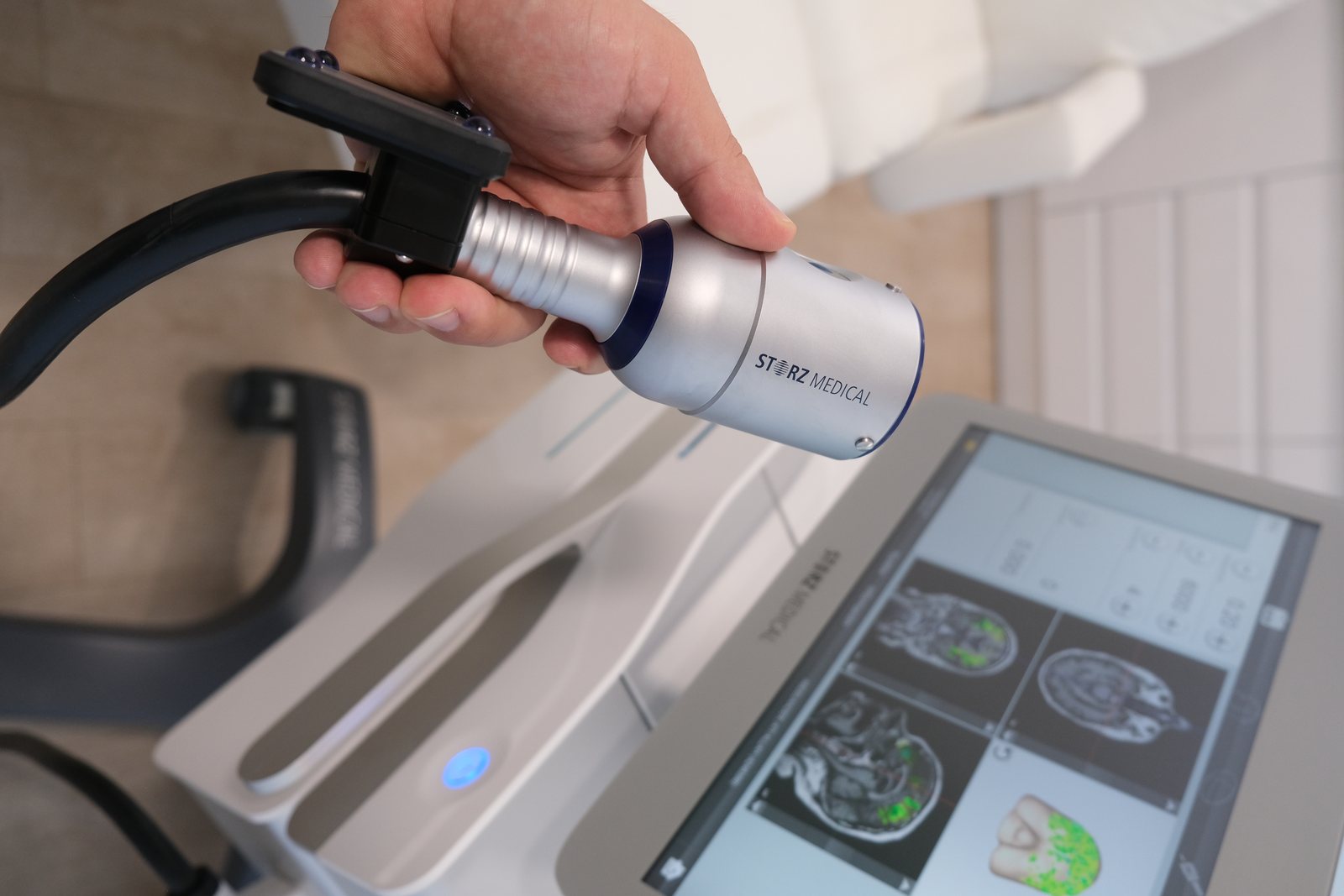
In the Neurology Department of Clínica Revita in Barcelona, we offer patients with early- and moderate-stage Alzheimer's disease a non-invasive neurostimulation option: Transcranial Pulse Stimulation (TPS) using the NEUROLITH® device from STORZ MEDICAL.
TPS is designed to support the brain's cognitive functions. Clinical studies have shown promising results in certain abilities, such as memory and attention, in some patients.
It is used as a complementary treatment alongside neurological follow-up and standard therapies.
Book a consultation to find out whether TPS may be suitable for you or a family member.
Reservar consultaWhat is TPS and how does it work?
Transcranial Pulse Stimulation (TPS) is a non-invasive method that uses short, low-energy acoustic pulses directed at specific regions of the brain.
The NEUROLITH® device makes it possible to apply these pulses following an individualized treatment protocol.
According to the available studies, TPS may stimulate neuroplasticity mechanisms —the brain's ability to modify and strengthen neural connections— as well as influence cerebral circulation and the functional activity of neural networks.
The aim of the treatment is to support cognitive functions such as memory, attention and orientation, with the possibility of benefiting certain aspects of the patient's daily functioning.
The session requires no surgery, anaesthesia or hospitalization. The patient stays awake and can communicate with the doctor during the procedure.
Who is TPS indicated for?
At Clínica Revita, we consider the use of TPS in the following situations:
- Early-stage Alzheimer's disease. When alterations in memory, attention or other cognitive functions appear, but the patient retains a significant degree of independence.
- Moderate-stage Alzheimer's disease. When cognitive difficulties are more evident and have a greater impact on daily life.
- Mild or moderate cognitive impairment and early-stage dementia, when specialized medical assessment indicates that these manifestations could be related to an early stage of Alzheimer's disease.
In the early stages, establishing an accurate diagnosis can be complex. Sometimes the disease first appears as mild cognitive impairment or incipient dementia.
For this reason, the doctor reviews the medical history, the available tests and the medical reports to determine whether TPS is indicated.
TPS does not replace the treatment prescribed by your regular neurologist. It can be combined with medication and cognitive stimulation as part of a comprehensive therapeutic approach.
Early diagnosis of Alzheimer's and risk assessment
Alzheimer's disease can develop gradually, even before noticeable memory alterations appear. That is why paying attention to the first cognitive changes and knowing the possible risk factors is especially important.
At Clínica Revita, we offer an individualized medical assessment for people who want to understand their cognitive health better, especially if there is a family history of Alzheimer's or recent difficulties with memory, attention or concentration.
During the consultation, the doctor assesses personal and family history, possible risk factors and the patient's cognitive status. When indicated, they may recommend additional tests that allow for a more in-depth evaluation and help guide medical decisions.
Early detection makes it possible to act in time, establish appropriate follow-up and assess the available treatment options.
Book a consultation and take the first step towards caring for your cognitive health.
Reservar consulta de neurologíaWhat results can TPS offer?
The main aim of TPS is to support the cognitive functions that are progressively affected by Alzheimer's disease.
Clinical studies have observed favourable changes in certain cognitive indicators, as well as in the functional activity and connectivity of different brain regions.
Depending on the individual response, the therapy may help to:
- improve certain aspects of memory and attention;
- support orientation and the performance of everyday activities;
- help maintain some cognitive abilities;
- improve certain aspects of quality of life.
The results of the therapy are individual and depend on the stage of the disease and the patient's general condition. To objectively assess the response to treatment, we carry out neuropsychological testing before and after the course.
What is TPS treatment like at Clínica Revita?
1. Consultation and comprehensive assessment
The doctor reviews the medical history, the available reports, MRI scans and other relevant tests, as well as the patient's previous and current treatments.
Before starting treatment, a neuropsychological evaluation is carried out to establish the baseline cognitive status.
2. Neurostimulation course
The usual TPS protocol consists of 6 sessions spread over 2–3 weeks.
The sessions are carried out without anaesthesia or hospitalization. The patient stays awake and can resume their usual activities after the procedure.
Depending on progress, the doctor may recommend additional or maintenance courses.
3. Evaluation of results
After 4–6 weeks, a new neuropsychological evaluation is carried out.
The doctor compares the results with the baseline values and analyses possible changes in memory, attention and other cognitive functions.
Treatment features
Format: 6 sessions over 2–3 weeks, without anaesthesia or hospitalization.
Technology: NEUROLITH® from STORZ MEDICAL, with CE marking for the application of TPS in Alzheimer's disease.
Follow-up: neuropsychological evaluation before and after treatment.
More about Alzheimer's and TPS therapy
Knowing the first symptoms of the disease, understanding how it progresses and discovering the available treatment options can help patients and their families make informed decisions.
How to detect Alzheimer's in time: first symptoms and diagnostic tests
Find out what the first warning signs are and which assessments can help identify cognitive changes.
Stages of Alzheimer's: symptoms of each phase and when to act
Learn the characteristics of the different stages of the disease and why early neurological assessment is important.
Brain neuroplasticity: how your brain keeps changing at any age
Discover what neuroplasticity is and why it is important for understanding the new neurostimulation techniques.
Frequently asked questions
Does TPS cure Alzheimer's disease?
There is currently no treatment capable of completely curing Alzheimer's disease.
However, TPS is a complementary treatment option that has shown promising results in clinical studies. In some patients, improvements in certain cognitive functions and favourable changes in the brain's functional activity have been observed.
The aim of the treatment is to support cognitive abilities and, where possible, benefit the patient's daily functioning. The individual response is assessed through neuropsychological testing.
Is the treatment painful? Does it require anaesthesia?
TPS is usually well tolerated and does not require anaesthesia. During the session, the patient may feel a slight sensation of pressure or tapping in the treated area.
No special recovery period is needed after the procedure.
How many sessions are needed?
The usual protocol includes 6 sessions over 2–3 weeks.
After evaluating the results, the doctor determines whether additional or maintenance courses are advisable.
Is a confirmed diagnosis of Alzheimer's necessary?
It is recommended to come with the neurologist's reports and the available tests.
If the diagnosis is not yet confirmed, the doctor will assess the situation and, if necessary, recommend additional tests.
The indication for TPS is established on an individual basis, taking into account the possible cause of the cognitive impairment.
Who cannot receive TPS treatment?
TPS is not applied in certain situations, including the presence of metal or electronic implants in the head area, brain tumours, coagulation disorders, thrombosis or pregnancy.
The doctor reviews contraindications and possible limitations before starting treatment.
Find out whether TPS can help you or a family member
With Alzheimer's disease, it is important to assess the patient's condition in time and learn about the available treatment options.
At Clínica Revita in Barcelona, we offer an individualized consultation, a review of the medical documentation and the selection of a TPS protocol based on each patient's needs.
Our doctor will explain the treatment possibilities, answer your questions and help you decide on the next steps.
You may come accompanied by a family member to clear up any doubts and receive all the information you need.
Book a neurology consultation and find out which treatment options may be suitable for your case.
Reservar cita Escribir por WhatsAppWhatsApp: +34 624 006 244 · [email protected]
The information on this page is for guidance only and does not replace an individual medical assessment.
Reviewed by: Dr. Tigran Chalabyan, medical director of Clínica Revita, 13/10/2026.