
Neurology & brain health
Types of dementia: how Alzheimer’s and other dementias differ
July 3, 2026 · 4 min ·
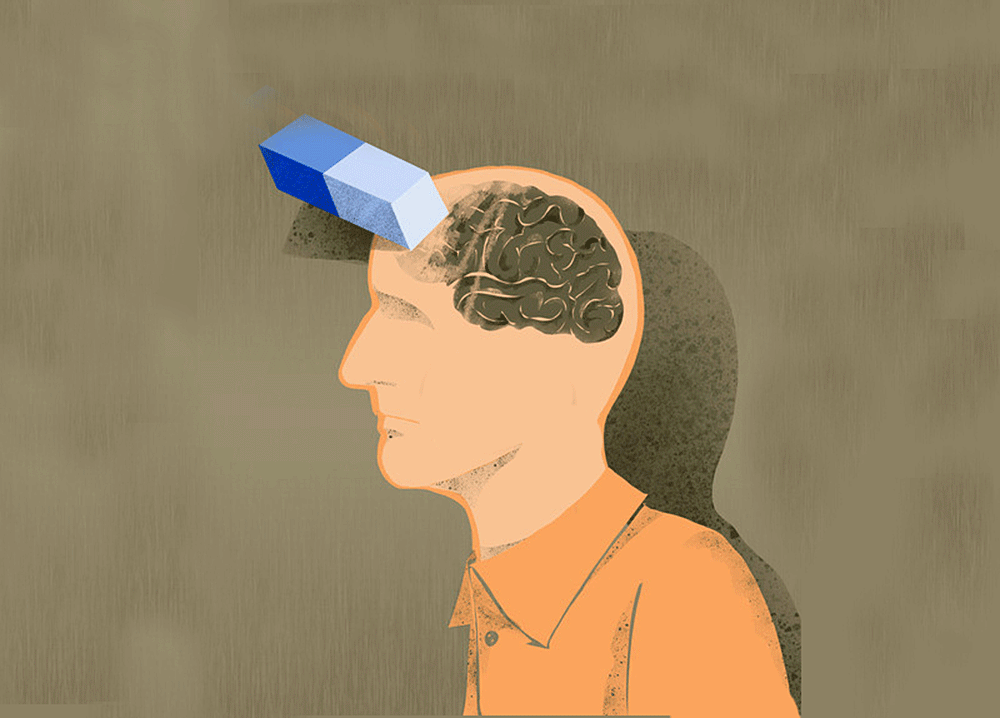
For many people, “dementia” and “Alzheimer’s” are the same thing. It is one of the most widespread misunderstandings in brain health, and it has real consequences: when a family does not distinguish between the different types of dementia, it becomes harder for them to understand the prognosis, anticipate the symptoms and make treatment decisions.
The reality is that dementia is not a specific disease but a syndrome — a set of symptoms — that can be caused by different illnesses. Alzheimer’s is the most common cause, but it is far from the only one. And each type of dementia has its own way of beginning, progressing and presenting itself.
In this article we explain what dementia is exactly, what its main types are, how they differ from Alzheimer’s and why an accurate, early diagnosis makes an enormous difference.
What is dementia?
Dementia is a progressive decline in cognitive functions — memory, reasoning, language, orientation, judgement — severe enough to interfere with the person’s daily life. It is not an inevitable consequence of ageing; although age is the main risk factor, dementia is always the result of a disease that damages the brain.
It is important to distinguish it from normal age-related forgetfulness. Forgetting where you left your glasses is normal. Forgetting how to use them, or not recognising a close relative, is not.
That is why it is worth clearing up the most common confusion: which is more serious, Alzheimer’s or dementia? The question, strictly speaking, makes no sense, because they are not comparable. Alzheimer’s is a type of dementia — the most frequent one. It would be like asking which is better, “a car” or “a Seat”. Dementia is the general category; Alzheimer’s, one of the diseases that cause it.
The most frequent types of dementia
There are more than a hundred possible causes of dementia, but a few account for the vast majority of cases.
Alzheimer’s disease
It is the most common cause, responsible for roughly 60 to 70% of all cases of dementia. It is characterised by the abnormal accumulation of two proteins in the brain — beta-amyloid and tau — which progressively damage and destroy neurons, starting with the hippocampus (the memory region).
Its most typical initial symptom is recent memory loss: the person forgets conversations, repeats questions, misplaces objects. As it advances, disorientation, language difficulties and, finally, loss of autonomy appear. It is a slowly progressing disease that can extend over years.
Vascular dementia
It is the second most frequent cause. It occurs when blood flow to the brain is compromised — by a stroke or by multiple micro-infarcts — which deprives the neurons of oxygen and nutrients.
Unlike Alzheimer’s, vascular dementia usually progresses “in steps”: there are abrupt worsenings followed by periods of stability, rather than a gradual, continuous decline. The symptoms depend on the area of the brain affected, and problems with attention, planning and thinking speed often predominate over pure memory loss. Its risk factors are the same as those for stroke: hypertension, diabetes, high cholesterol, smoking.
Dementia with Lewy bodies
Caused by abnormal deposits of a protein (alpha-synuclein) in the neurons. It has very characteristic features that distinguish it from the rest: marked fluctuations in alertness (the person goes from lucid to confused within hours), detailed visual hallucinations, and motor symptoms similar to Parkinson’s (rigidity, slowness, tremor). Sleep is also usually severely disturbed.
Frontotemporal dementia
It mainly affects the frontal and temporal lobes of the brain, and tends to appear at an earlier age than the rest (often between 45 and 65). What is striking is that, at first, memory may be relatively preserved. What changes is the personality and behaviour: the person becomes impulsive, loses empathy, acts in socially inappropriate ways, or else has severe language difficulties. That is why, in its early stages, it is often mistaken for a psychiatric problem.
Mixed dementias and other causes
It is not uncommon for several types to coexist — most often, Alzheimer’s and vascular dementia at the same time. In addition, there are secondary dementias caused by other conditions: chronic alcoholism (alcoholic dementia), vitamin deficiencies, infections, hydrocephalus or metabolic disorders. Some of these causes, detected in time, are partially reversible, which underlines the importance of diagnosis.
Alzheimer’s vs. senile dementia: are they the same?
The term “senile dementia” has fallen out of use among professionals today, but it remains very present in everyday language. It was traditionally used to refer to the cognitive decline that appeared in old age, as if it were a natural consequence of growing older.
Today we know that this is incorrect. Severe cognitive decline is never a normal part of ageing: it always responds to a specific disease. What used to be called “senile dementia” is, in most cases, Alzheimer’s disease or another identifiable dementia. That is why it is preferable to speak of the specific type of dementia, and not of “senile dementia” as if it were a diagnosis in itself.
How is dementia diagnosed and the type identified?
There is no single test that diagnoses dementia. The process combines several elements:
-
A detailed clinical history, usually with the help of a relative who provides information about how the symptoms have evolved.
-
Cognitive tests that assess memory, attention, language and executive functions. There are standardised scales, such as the GDS scale, that help determine the degree of impairment.
-
Blood tests to rule out reversible causes (vitamin deficiencies, thyroid problems).
-
Neuroimaging (MRI, CT) to visualise the state of the brain and identify the pattern of damage.
Identifying the specific type of dementia is essential, because the prognosis, the management and the treatment options vary enormously from one to another.
Can dementia be treated?
Most neurodegenerative dementias do not, as of today, have a cure that reverses the damage already done. But this does not mean that nothing can be done. On the contrary: there are multiple interventions that can slow the progression, control the symptoms and significantly improve the quality of life of the patient and their family.
The approach usually combines several strategies:
Pharmacological treatment. There are medications that can temporarily slow the progression of symptoms in certain types of dementia, especially Alzheimer’s.
Non-pharmacological therapies. Cognitive stimulation, occupational therapy, physical activity and maintaining an active social life have shown consistent benefits in slowing decline and preserving autonomy.
Neurostimulation. One of the most promising lines is non-invasive brain stimulation. TPS therapy (Transcranial Pulse Stimulation) uses focused acoustic pulses to stimulate specific brain regions. According to the available clinical data, it promotes the formation of new blood vessels in the brain, improves communication between neurons and supports cognitive function. Studies with the NEUROLITH device show improvements in memory, attention and orientation, especially in patients with Alzheimer’s in the early and moderate stages.
The decisive factor, in all cases, is TIME. The earlier dementia is diagnosed and treatment begins, the greater the brain’s capacity to respond — because it retains more functional neurons and more capacity for compensation. Intervention in the early stages is, without doubt, the one that offers the best results. At Clínica ReVita we apply TPS therapy with NEUROLITH precisely with that approach: to intervene early in order to preserve function for as long as possible.
Can dementia be prevented?
There is no formula that guarantees avoiding dementia, but the scientific evidence is increasingly clear: a significant proportion of cases could be delayed or prevented by acting on modifiable risk factors. According to the available studies, up to 40% of dementia risk is associated with factors we can influence throughout life.
The main ones are:
-
Cardiovascular health. What is good for the heart is good for the brain. Controlling hypertension, diabetes and cholesterol, and not smoking, directly reduces the risk of dementia — especially the vascular type.
-
Regular physical activity. Aerobic exercise improves cerebral blood flow and supports neuronal health.
-
Continuous mental stimulation. Keeping the brain active — learning, reading, solving problems — builds what neurologists call “cognitive reserve”, a kind of cushion that helps the brain resist damage better.
-
An active social life. Isolation is a risk factor; social relationships, a protective one.
-
Quality sleep. During deep sleep, the brain clears metabolic waste associated with neurodegeneration.
-
Hearing protection. Uncorrected hearing loss in midlife has been identified as one of the most relevant modifiable risk factors.
-
A balanced diet. The Mediterranean diet is consistently associated with less cognitive decline.
Prevention does not begin at 70: the lifestyle decisions made at 40 and 50 have a measurable impact on brain health decades later.
In summary
Dementia is not a single disease but a syndrome with many possible causes. Alzheimer’s is the most frequent, but there are others — vascular, with Lewy bodies, frontotemporal — with different characteristics and prognoses. Distinguishing between them requires a specialised neurological evaluation, and doing so in time is key: although most have no cure, there are treatments that slow their progression and improve quality of life, with better results the earlier they are started.
Have you noticed signs of cognitive decline in a loved one?
At Clínica ReVita (Barcelona) we carry out complete neurological evaluations to diagnose the type of cognitive decline and design a personalised treatment plan. We offer access to TPS with NEUROLITH brain stimulation therapy, indicated for Alzheimer’s in its early stages and the age-related degenerative changes.
📞 Call us at +34 624 00 6244 or visit us at Carrer de Santaló, 105, 08021 Barcelona.