
Estética y cuidado de la piel
How to Get Rid of Cellulite: Which Treatments Really Work
July 23, 2026 · 4 min ·
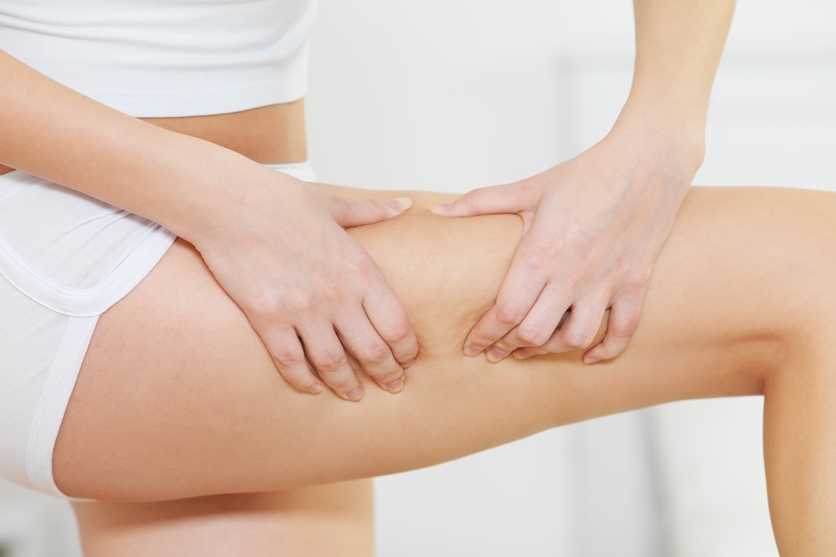
Let's start by debunking the most widespread myth: cellulite is not a matter of weight. It appears on slim women and on women with curvier figures, on athletes and on sedentary people alike. In fact, it is estimated to affect the vast majority of women from puberty onward, regardless of their size. It is not a disease or a sign of neglect: it is a feature of female skin, with a strong hormonal and genetic basis.
That said, the fact that it's common doesn't mean it can't be improved. What matters is having realistic expectations and knowing how to tell what really works from what only works in advertising. Because there is a lot of miracle products and very little honest information about cellulite.
In this article we explain what cellulite actually is, why it appears mainly on the legs and buttocks, what types and grades exist, and which treatments — from habits to shockwave therapy and mesotherapy — offer real results.
What is cellulite and why does it appear?
Cellulite — or, more technically, edematous fibrosclerotic panniculopathy — is an alteration of the fatty tissue located just beneath the skin. That characteristic "orange peel" or quilted look is produced by a combination of factors: fat cells (adipocytes) increase in size and push toward the surface, while the connective tissue septa that separate them pull the skin inward. The result is that irregular, dimpled surface.
But cellulite isn't only fat. Fluid retention, poorer circulation in the area, and changes in connective tissue also play a role. That's why it can appear even in slim people.
What triggers it? Mainly:
-
Hormones. Estrogens play a central role, which is why cellulite is overwhelmingly a female phenomenon and tends to appear or become more pronounced during stages of hormonal change (puberty, pregnancy, menopause).
-
Genetics. A predisposition to cellulite, skin type, and the way fat is distributed are largely inherited.
-
Circulation and fluid retention. Poor circulation promotes inflammation and fluid retention in the area.
-
Lifestyle. A sedentary lifestyle, an unbalanced diet, smoking, or spending long hours standing or sitting can make it worse.
Understanding what cellulite is helps explain why no single treatment eliminates it completely: since several factors are at play at once, the best results come from combining approaches.
Types and grades of cellulite
Not all cellulite is the same, and distinguishing the type is key to choosing the right treatment. Three forms are mainly described:
-
Edematous cellulite. The type most related to fluid retention. The skin looks swollen and feels heavy, especially in the legs.
-
Soft or flaccid cellulite. Associated with lack of muscle tone and loss of firmness; it moves when you change position. Common after weight changes.
-
Fibrous or hard cellulite. The hardest to treat. The connective tissue septa harden and form the most pronounced, tightly bound dimples. It's usually painless but very visible.
In addition to type, cellulite is described in terms of grades according to its severity:
-
Grade 1: only visible when pinching the skin.
-
Grade 2: visible while standing, but not lying down.
-
Grade 3 (severe cellulite): visible in any position, with obvious dimples and, sometimes, changes in skin texture.
Knowing the type and grade allows expectations to be adjusted and a realistic treatment plan to be designed.
Cellulite on the legs and buttocks
If you wonder why cellulite mainly appears in specific areas, the answer lies in anatomy and hormones. Cellulite on the legs — especially the thighs — and on the buttocks is the most common, because these are the areas where the female body tends to store fat under the influence of estrogens.
Additionally, in these areas the connective tissue septa are arranged perpendicular to the skin, which makes it easier for fat to "poke through" and create that quilted look. In men, by contrast, those septa have a crisscross arrangement, which makes cellulite much less visible.
Cellulite on the legs and buttocks is also favored by slower circulation in the lower body, especially if a lot of time is spent standing or sitting. That's why improving circulation is one of the pillars of any treatment in these areas.
How to remove cellulite: what works and what doesn't
Let's be honest, because there's a lot of misinformation in this area. There is no magic formula that eliminates cellulite overnight. But there are measures that, with consistency, genuinely improve it.
### Habits: the essential foundation
No aesthetic treatment works well without a foundation of healthy habits. These are the first line of defense, and although they don't eliminate cellulite completely, they reduce it and prevent it from getting worse:
-
Physical exercise, combining cardio (improves circulation and reduces fat) with toning (improves the look of the skin by strengthening the muscle beneath the fat).
-
A balanced diet, reducing excess salt (which promotes fluid retention), sugars, and ultra-processed foods.
-
Good hydration, which helps combat fluid retention.
-
Avoiding smoking, which worsens circulation and skin condition.
Expectations should be realistic: habits improve cellulite, but rarely make it disappear completely, especially at more advanced grades or in the fibrous form.
### Creams and remedies: what to expect
Anti-cellulite creams can temporarily improve the look and hydration of the skin, and some containing caffeine or retinol have a mild effect. But it's important to be realistic: their action is superficial and temporary. They don't penetrate deeply enough to act on the fibrous septa that cause the dimples. They're a good complement, never a solution on their own.
When looking for a more effective way to remove cellulite from the legs — especially at moderate or severe grades — this is when medical aesthetic treatments come into play.
Shockwave therapy for cellulite
One of the treatments with the best backing for cellulite, especially the fibrous type, is shockwave therapy. Unlike creams, it acts in depth, right where the problem originates.
How does it work? Shockwaves are acoustic waves applied to the affected area and, according to available studies, act through several mechanisms: they help break up and reorganize the fibrous connective tissue septa that form the dimples, stimulate collagen production — improving skin firmness and elasticity — and promote microcirculation and drainage, which reduces fluid retention.
Its advantages are clear:
-
Non-invasive: no needles, no surgery, no recovery time.
-
Acts on the cause: works directly on the fibrous tissue and circulation.
-
Improves skin texture and firmness, not just its surface appearance.
-
Outpatient: sessions are brief and you can return to your day immediately.
Evidence suggests the best results are achieved with a protocol of several sessions and, above all, by combining shockwave therapy with healthy habits. At Clínica Revita we apply shockwave therapy for cellulite as part of a comprehensive, personalized approach based on each person's cellulite type and grade.
Mesotherapy and combined treatments
The best results against cellulite rarely come from a single treatment, but rather from combining several that act on different factors. This is where mesotherapy and combined protocols come in.
Mesotherapy for cellulite consists of microinjections of active ingredients — substances that promote drainage, improve circulation, and help mobilize localized fat — directly into the area being treated. It is an anti-cellulite treatment that works from within the tissue and is usually carried out in spaced-out sessions.
Combining approaches makes it possible to attack cellulite on several fronts at once: shockwave therapy on the fibrous tissue and firmness, mesotherapy on circulation and fat, and habits as the foundation for it all. This combined approach, adapted to each person's cellulite type and goal, is the one that offers the most satisfying and lasting results.
What matters is that a professional assesses each case: not all cellulite responds the same way, and a good anti-cellulite treatment always begins with a correct diagnosis of type and grade.
In summary
Cellulite is a very common feature of female skin, with a hormonal and genetic basis, that does not depend on weight. It appears mainly on the legs and buttocks and comes in different types and grades. There's no miracle solution: healthy habits are the essential foundation, creams have a limited and superficial effect, and treatments that act in depth — such as shockwave therapy and mesotherapy — are the ones that offer real results, especially when combined and adapted to each case.
Want to treat cellulite with real results?
At Clínica Revita (Barcelona) we design personalized anti-cellulite treatments based on your cellulite type and grade, combining aesthetic shockwave therapy with other approaches to improve skin firmness and texture. No surgery, no recovery time.
📞 Call us at +34 624 00 6244 or visit us at Carrer de Santaló, 105, 08021 Barcelona.