Shock waves
Aftermath of a blow to the head: when to worry and how to recover
June 17, 2026 · 4 min ·
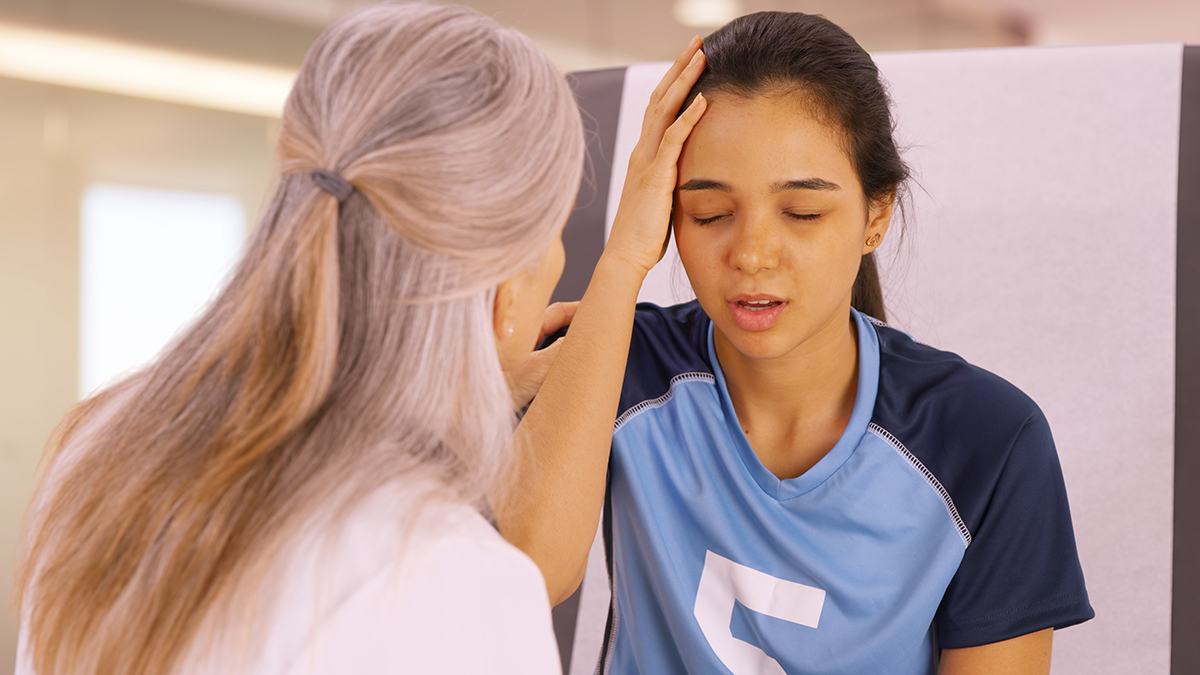
A slip in the bathroom, a traffic accident, a knock while playing sport, a fall off a bicycle. Head injuries are extraordinarily common, and most have no serious consequences — but not all. Sometimes a blow that seemed mild leaves after-effects that surface days, weeks or even months later: persistent headaches, concentration problems, dizziness, mood changes.
The difficulty lies in telling them apart. When is a blow to the head just a scare, and when is it something that needs medical attention? Which symptoms should you watch for? And, above all, what should you do when the after-effects don’t go away?
In this article we explain what kinds of injury a blow to the head can cause, which warning signs you should never ignore, what long-term after-effects can remain, and what options exist to restore brain function.
What happens in the brain after a blow to the head?
The brain is a soft, delicate organ that floats in cerebrospinal fluid (CSF) inside the skull, which acts as a protective helmet. When the head takes an impact — or a sudden jolt, like whiplash — the brain can strike the inner walls of the skull. This causes stretching and damage to the nerve fibres and, in some cases, bleeding or inflammation.
The general medical term for these injuries is traumatic brain injury (TBI), and it covers a wide spectrum of severity:
-
Mild TBI (concussion): The most common. Brain function is temporarily altered, but there is usually no structural damage visible on imaging.
-
Moderate TBI: There may be prolonged loss of consciousness and detectable injuries.
-
Severe TBI: Involves significant brain damage and requires urgent care.
Most everyday blows to the head are mild. But precisely for that reason it is important to recognise when one of them is not.
What is a concussion?
A concussion is the most frequent form of mild traumatic brain injury. It occurs when an impact or jolt temporarily disrupts how the brain works. It does not always involve loss of consciousness — in fact, in most cases there is none — which leads many people to play it down.
The symptoms of a concussion can appear immediately or be delayed by several hours:
-
Headache
-
Dizziness or a sense of unsteadiness
-
Confusion or a feeling of being “dazed”
-
Nausea or vomiting
-
Sensitivity to light or noise
-
Difficulty concentrating or remembering
-
Blurred vision
-
Tiredness or drowsiness
In most cases a concussion resolves within days or weeks with proper rest. But it is worth monitoring, because it sometimes leaves more persistent after-effects.
Warning signs: when a blow to the head is serious
This is the most important section of the article. There are symptoms that should never be ignored and that require going to the emergency room immediately. How to tell whether a blow to the head is serious:
-
Loss of consciousness, even briefly.
-
Repeated vomiting.
-
A severe headache that worsens instead of improving.
-
Growing confusion, disorientation or strange behaviour.
-
Seizures.
-
Difficulty speaking, seeing or walking.
-
Weakness or numbness in the arms or legs.
-
Pupils of different sizes (anisocoria).
-
Fluid or blood draining from the nose or ears.
-
Excessive drowsiness or difficulty waking the person.
These signs may indicate internal bleeding or a clot — a haematoma compressing the brain — a medical emergency that requires immediate action.
Special attention in these cases: older adults, people taking anticoagulants, young children and those who have suffered a high-energy impact (traffic accident, fall from height) should be assessed medically even if the blow seems mild. In these groups, complications such as subdural haematoma can develop slowly and silently.
What to do after a blow to the head
If the blow was mild and there are no warning signs:
-
Physical and mental rest during the first 24 to 48 hours. Reduce screen use, noise and cognitive effort.
-
Monitoring. It is advisable for someone to stay with the person during the first hours and watch for the appearance of warning symptoms.
-
Avoid alcohol and any medication not recommended by a doctor.
-
Gradual return to activity, especially to sport. Returning too soon to a risky activity before full recovery can be dangerous.
If any warning sign appears, don’t wait: go to the emergency room.
Long-term after-effects of a traumatic brain injury (TBI)
Here lies the least known aspect and, often, the most frustrating for patients. In some cases, even after a mild TBI, the symptoms do not disappear entirely. When concussion symptoms persist beyond the expected weeks, this is called post-concussion syndrome.
The long-term after-effects of a blow to the head can include:
-
Chronic headaches lasting for months.
-
Cognitive problems: difficulty concentrating, slowed thinking, memory lapses, “brain fog”.
-
Dizziness and balance problems.
-
Sleep disturbances: insomnia or unrefreshing sleep.
-
Emotional changes: irritability, apathy, greater sensitivity to stress, emotional lability.
-
Persistent fatigue.
-
Sensitivity to light and noise.
These after-effects have a biological explanation: the trauma damages neural connections and alters cerebral blood flow, and the brain needs to rebuild those connections and restore its normal functioning. The good news is that the brain has a remarkable capacity for recovery thanks to neuroplasticity — its ability to reorganise itself and create new connections. The question is how to facilitate and speed up that process.
Recovery and neurological rehabilitation
Most people recover completely from a mild TBI with rest and time. But when the after-effects drag on, active intervention can make the difference. The approach to recovery usually includes:
Cognitive rehabilitation. Structured exercises to retrain the attention, memory and processing speed affected by the trauma.
Physiotherapy and vestibular rehabilitation for balance problems and dizziness.
Pain and sleep management with an individualised approach.
Neurostimulation. One of the most innovative options for promoting brain recovery is non-invasive brain stimulation. TPS therapy (Transcranial Pulse Stimulation) is specifically indicated, among other applications, for the consequences of head trauma and concussions.
How does it help? Through focused acoustic pulses, TPS stimulates the affected brain regions, directly activating the brain’s natural repair mechanisms. According to the available clinical data, it promotes the formation of new blood vessels in the damaged tissue (improving the supply of oxygen and nutrients), optimises communication between neurons and enhances neuroplasticity. This translates, according to the studies carried out with the NEUROLITH device, into improvements in memory, concentration and overall cognitive function.
At Clínica Revita (Barcelona) we apply TPS therapy with NEUROLITH as part of the approach to the after-effects of trauma and concussions. It is an outpatient, painless treatment, without anaesthesia or known side effects, completed in six sessions of about 30 minutes over two weeks.
Blows to the head in specific contexts
Not all head injuries carry the same risk or require the same monitoring. Some particular situations are worth keeping in mind.
In sport. Concussions are common in contact sports (football, rugby, boxing, martial arts) and also in cycling or skiing. The great danger here is the so-called “second impact syndrome”: taking a new blow before recovering from the previous one can cause far more serious brain damage. That is why the golden rule in sport is not to return to competition until full recovery, as assessed by a professional.
In older adults. A seemingly trivial fall can have serious consequences in an older person, especially if they take anticoagulants. Chronic subdural haematoma (SDH) — a slow accumulation of blood between the brain and the skull — can develop over weeks after a mild blow and present as confusion, drowsiness or behavioural changes that are mistaken for dementia. Faced with any sudden cognitive decline in an older person who has had a recent fall, a neurological assessment is advisable.
In children. Young children cannot always describe what they feel, so you have to watch for signs such as inconsolable crying, vomiting, abnormal drowsiness or irritability after a blow.
Repeated blows over time. The accumulation of repeated mild head injuries — as in some professional sports — has been linked to a higher risk of long-term neurological problems. Prevention and proper protection (helmets, correct technique) are essential.
In summary
Most blows to the head are mild and resolve on their own, but some require urgent care — loss of consciousness, repeated vomiting, a worsening headache or confusion are signs that should never be ignored. When the after-effects of a trauma drag on over time (headaches, memory or concentration problems, dizziness), there is no need to resign yourself to living with them: the brain has a capacity for recovery, and there are neurostimulation therapies that can help speed up that process.
Are you suffering after-effects from a blow to the head that won’t go away?
At Clínica ReVita (Barcelona) we carry out complete neurological evaluations and offer access to TPS brain stimulation therapy with NEUROLITH, indicated for the consequences of head trauma and concussions. An outpatient, painless treatment with no known side effects.
📞 Call us at +34 624 00 6244 or visit us at Carrer de Santaló, 105, 08021 Barcelona.