
Neurology & brain health
Senile Dementia: Symptoms, Stages and Care
July 23, 2026 · 4 min ·
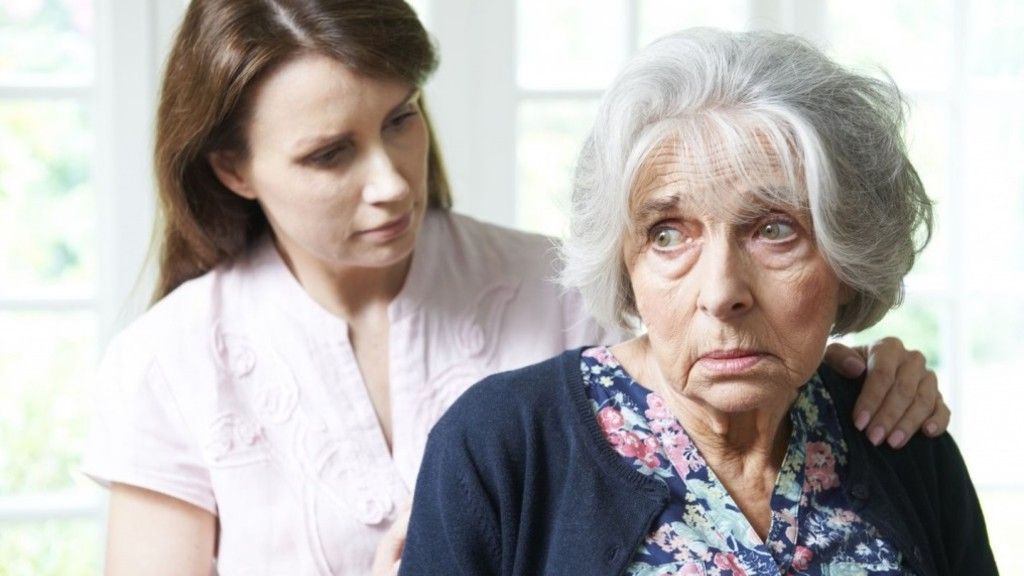
"My mother has senile dementia." It's one of the most common phrases when a family starts to notice that an elderly loved one is losing their memory, becoming disoriented or changing in character. The term "senile dementia" is deeply rooted in everyday language, and we tend to use it for the mental decline we — mistakenly — associate with growing old.
It's worth clarifying from the outset: severe cognitive decline is never a normal part of ageing. Behind what is popularly called "senile dementia" there is always a specific illness that can be identified. And understanding which one makes all the difference, because the prognosis, the care and the treatment options all depend on it.
In this article we explain what senile dementia really is, what its symptoms are, how it progresses in stages, what life expectancy it entails, how to care for someone who has it and what can be done to slow its advance.
What is senile dementia?
The word "dementia" refers to a progressive decline in mental functions — memory, reasoning, language, orientation, judgement — severe enough to interfere with daily life. The adjective "senile" simply refers to advanced age. So when we talk about senile dementia, we mean the dementia that appears in older people.
That said, the term is now out of use among professionals, and for good reason: it isn't a diagnosis in itself. "Senile dementia" doesn't tell us which illness is causing the decline. And that is precisely what matters, because dementia is not a single disease but a syndrome that can have very different causes: Alzheimer's disease, vascular dementia, dementia with Lewy bodies, frontotemporal dementia and others. You can read more about each one in our article on the types of dementia and how they differ.
In practice, most cases of what is called "senile dementia" correspond to Alzheimer's disease, on its own or combined with vascular dementia. That's why, at the first symptoms, the specialist's goal is to identify the exact cause: only then can an appropriate prognosis and treatment be established.
Senile dementia vs. Alzheimer's: are they the same?
It's one of the most common confusions. The answer is that they are not exactly the same, but they are closely related. Alzheimer's is a specific disease; senile dementia is a generic term for mental decline in old age. Put another way: Alzheimer's is the most frequent cause of what is popularly called senile dementia, but not the only one.
The difference between senile dementia and Alzheimer's, then, is not one of "more serious" or "less serious" but of category: one is the general colloquial term, and the other is the specific disease that most often causes it. When the neurologist determines the exact cause, we stop speaking of "senile dementia" and speak of the precise diagnosis.
Symptoms of senile dementia
The symptoms of senile dementia vary according to the cause and the stage, but they usually follow a recognisable pattern. It's useful to distinguish between the cognitive and the behavioural manifestations.
Cognitive symptoms
-
Memory loss, above all of recent events: forgetting conversations, repeating questions, misplacing objects.
-
Disorientation in time and space: not knowing what day it is, getting lost in familiar places.
-
Language difficulties: not finding words, losing the thread of a conversation.
-
Problems with reasoning and judgement: difficulty making decisions, handling money or solving everyday problems.
-
Difficulty carrying out familiar tasks: cooking, dressing or managing medication.
Behavioural and emotional symptoms
-
Changes in character: irritability, apathy, suspicion.
-
Agitation or anxiety, especially in the late afternoon (so-called "sundowning").
-
Social withdrawal and abandonment of hobbies.
-
Sleep disturbances.
-
In advanced stages, hallucinations or delusions.
How senile dementia begins
At first the symptoms are subtle and easily put down to age. Senile dementia usually begins with frequent lapses about recent events, small slips in familiar tasks and the occasional episode of disorientation. Often it is the family members — not the person themselves — who first notice that "something isn't right". Recognising these early signs and consulting as soon as possible is key to acting in time.
Stages of senile dementia
Senile dementia advances gradually, generally through three stages:
Mild stage. The symptoms are already noticeable but the person retains a fair amount of independence. Lapses of recent memory predominate, along with the odd slip in complex tasks and subtle mood changes. This is the stage at which intervention is most effective.
Moderate stage. The decline becomes obvious. Memory fails more markedly, confusion about family members appears, along with greater disorientation and a need for help with everyday activities such as dressing or washing. It is usually the longest phase and the most demanding for caregivers. Behavioural disturbances may arise.
Advanced stage. The damage is extensive. The person loses the ability to communicate, depends completely on others for all activities, has mobility and swallowing problems and is more vulnerable to infections. Care focuses on comfort and dignity.
As with any illness, the speed of progression and the intensity of the symptoms vary greatly from one person to another. The stages are a general guide, not an exact calendar.
Life expectancy in senile dementia
This is one of the questions that causes the most distress, and also one of the hardest to answer precisely. Life expectancy in senile dementia depends on many factors: the specific cause of the decline, the person's age, their general state of health, associated conditions and the quality of care.
On average, according to the available data, a person with Alzheimer's-type dementia lives between 8 and 10 years from diagnosis, although some live considerably longer and others less. Vascular dementia can follow a different course, often "in steps". These figures are indicative: what truly matters is to understand that good management of the illness and appropriate care have a significant influence both on duration and, above all, on quality of life.
Care: how to support a person with senile dementia
Caring for a person with senile dementia is a long road that combines practical, emotional and organisational aspects. These guidelines help make it more bearable for everyone.
A safe and adapted environment
-
Remove rugs, cables and obstacles that could cause falls.
-
Install adequate lighting and grab bars.
-
Store dangerous objects away and use safety locks.
-
Keep the home tidy and recognisable, avoiding abrupt changes.
Communication
-
Speak slowly, with short, simple sentences.
-
Maintain eye contact and a calm tone.
-
Don't argue or correct constantly: validating the emotion is more useful than imposing reality.
-
Be patient with repetition.
Routines and stimulation
-
Keep regular schedules for meals, sleep and activity: routine provides security.
-
Encourage adapted activities that stimulate the mind and keep the person active.
-
Foster social and physical contact within their capabilities.
Caring for the caregiver
This point is forgotten far too often. Supporting a person with dementia over years has a real physical and emotional cost. Caregiver burnout is a well-documented phenomenon, and neglecting yourself helps no one. Asking other family members for help, sharing out responsibilities, keeping spaces of your own and seeking professional support is not a luxury: it's a necessity. A caregiver who is cared for provides better care.
Can the advance of senile dementia be slowed?
Here is the most important message. Most neurodegenerative dementias have, as of today, no cure that reverses the damage already done. But that doesn't mean nothing can be done. On the contrary: there are interventions capable of slowing the progression, controlling the symptoms and noticeably improving quality of life.
The approach usually combines several strategies:
-
Drug treatment, which can temporarily slow the evolution of symptoms in certain types of dementia.
-
Cognitive stimulation and non-pharmacological therapies, which help preserve mental abilities and independence.
-
Physical activity, social life and healthy habits, with proven benefits for brain health.
-
Neurostimulation. One of the most innovative approaches is non-invasive brain stimulation, which acts directly on the brain's repair mechanisms.
The decisive factor, in every case, is time. The sooner the cause of the decline is identified and treatment is started, the greater the brain's capacity to respond, because it retains more functional neurons and more capacity for compensation. Intervention in the early stages is what offers the best results.
At Clínica Revita (Barcelona), our neurology unit specialises in the diagnosis and management of cognitive decline and dementia in older people. We carry out a complete neurological assessment to identify the exact cause of the decline and design a personalised treatment plan, with access to the most advanced brain-stimulation therapies for the early and moderate stages.
In short
"Senile dementia" is a popular term that covers mental decline in old age, but it is not a diagnosis: behind it there is always a specific illness — most often Alzheimer's — that needs to be identified. Its symptoms combine cognitive failures and behavioural changes, and it advances in stages until full dependence. Life expectancy and, above all, quality of life depend largely on good care and an early diagnosis. Because although there is no cure, there is a great deal that can be done: the sooner you act, the longer it is possible to preserve independence.
Is your elderly relative showing signs of decline and you don't know what to do?
At Clínica Revita (Barcelona) we carry out complete neurological assessments to identify the cause of cognitive decline and design a personalised plan, with access to the most advanced brain-stimulation therapies for the early and moderate stages.
📞 Call us at +34 624 00 6244 or visit us at Carrer de Santaló, 105, 08021 Barcelona.