
Neurology & brain health
Stages of Alzheimer's Disease: Symptoms of Each Phase and When to Act
Receiving an Alzheimer's diagnosis — your own or a loved one's — raises many questions, and almost all of them start with the same word: when? When will the hardest symptoms appear? When will they stop recognising me?
July 22, 2026 · 6 min ·
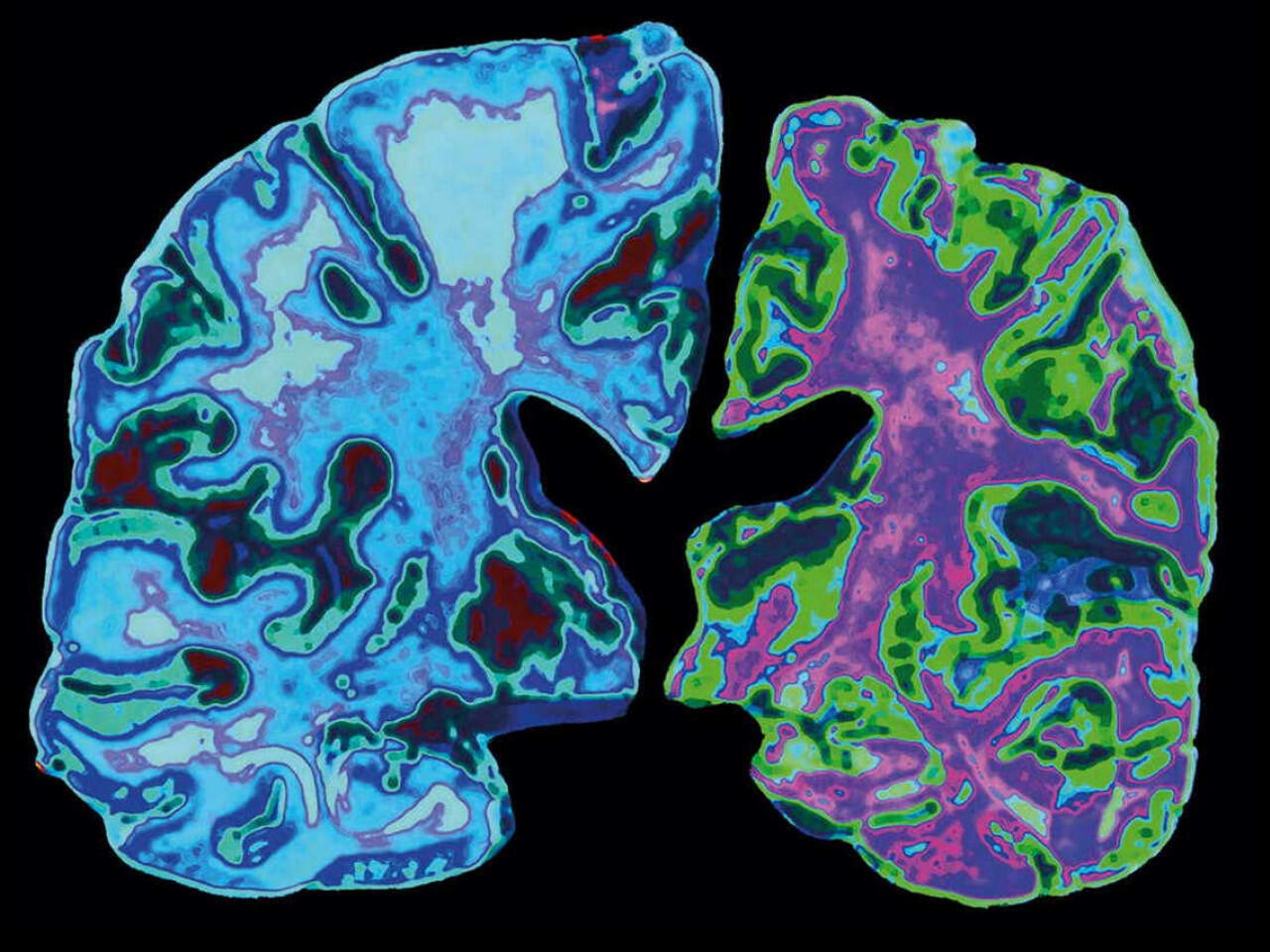
Receiving an Alzheimer's diagnosis — your own or a loved one's — raises many questions, and almost all of them start with the same word: when? When will the hardest symptoms appear? When will they stop recognising me? How much time do we have? Understanding how the disease progresses, stage by stage, doesn't remove the uncertainty, but it does help with something essential: anticipating, planning and making decisions in time.
Alzheimer's is a neurodegenerative disease that progresses gradually, over years. It isn't a switch that turns off all at once, but a slow process in which abilities are lost step by step. Knowing the stages of Alzheimer's lets families understand what to expect at each point, adapt care and — crucially — identify the window in which treatment can be most effective.
In this article we review the phases of Alzheimer's, the symptoms characteristic of each one, how long the disease usually lasts and what can be done to slow its progression.
What is Alzheimer's and why does it progress in stages?
Alzheimer's is the most common cause of dementia. It is characterised by the abnormal build-up of two proteins in the brain — beta-amyloid and tau — that progressively damage and destroy neurons. This damage doesn't happen uniformly or all at once: it begins in a specific region of the brain, the hippocampus (responsible for recent memory), and from there spreads little by little to other areas in charge of language, reasoning, orientation and, finally, the most basic functions.
That is precisely why the disease advances in stages: as the deterioration spreads through the brain, different functions fail one after another, in a relatively predictable order. It is this predictability that makes it possible to describe phases with characteristic symptoms.
It's worth keeping in mind, though, that every person is different. The speed of progression, the intensity of the symptoms and the exact order in which they appear vary from one patient to another. The stages are a general guide, not an exact calendar.
How many stages does Alzheimer's have?
There are several ways to classify how Alzheimer's evolves. The one most used in clinical practice groups the disease into three broad phases: mild, moderate and advanced. In addition, many professionals use a more detailed seven-point scale — the GDS or Reisberg scale — which we'll look at later.
To make it clear, we'll first walk through the three main stages, which best reflect the real experience of patients and families.
Early or mild stage: the first symptoms
This is the phase in which Alzheimer's begins, and also the hardest to detect, because many of its signs are mistaken for normal ageing or for stress. Recognising it, however, is crucial, since this is the point at which intervention is most effective.
The first symptoms usually include:
-
Loss of recent memory. The person forgets recent conversations, repeats the same questions, misplaces objects or doesn't remember appointments. Long-term memory, by contrast, stays fairly intact at first.
-
Difficulty finding words. It's hard to come up with the exact term in a conversation.
-
Mild disorientation. Occasional confusion with dates or when driving unfamiliar routes.
-
Problems planning and organising. Managing accounts, following a recipe or keeping track of medication becomes more complicated.
-
Subtle mood changes. Apathy, irritability or a degree of withdrawal from social life.
At this stage the person largely retains their independence: they can live alone, work or drive, though with more effort and the occasional slip. Looking back, many families recognise that the first signs were present well before they sought help. So when frequent memory lapses begin to interfere with daily life, it's best to consult a specialist as soon as possible.
Moderate stage: when the disease becomes obvious
This is usually the longest phase and also the most demanding for caregivers. The deterioration spreads to new areas of the brain and the symptoms become impossible to ignore.
Features of the moderate stage:
-
More marked memory loss. The person may not remember their address, phone number or important details of their personal history. Confusion about family members begins.
-
Greater disorientation in time and space. They get lost in familiar places and don't know what day or season it is.
-
Language difficulties. Following or keeping up a conversation becomes hard; vocabulary shrinks.
-
Need for help with everyday activities. Dressing, washing or choosing appropriate clothes requires supervision or assistance.
-
Changes in behaviour and personality. Agitation, suspicion, wandering, sleep disturbances and, in some cases, hallucinations or delusions may appear.
At this phase the person can no longer live independently and needs ongoing support. It is also the moment when many families consider reorganising care, seeking professional help or adapting the home to ensure safety.
Advanced or terminal stage: total dependence
This is the final phase of Alzheimer's, in which the brain damage is extensive and the person loses the ability to respond to their surroundings. Care focuses entirely on well-being and quality of life.
Symptoms of terminal Alzheimer's include:
-
Loss of the ability to communicate. Speech is reduced to a few words or disappears.
-
Total dependence. The person needs help with every activity: eating, washing, moving.
-
Loss of mobility. Difficulty walking, sitting or holding the head upright; the person frequently becomes bedridden.
-
Swallowing problems (dysphagia), which increase the risk of infection.
-
Greater vulnerability to infections, especially respiratory ones, which are a common cause of complications at this phase.
At this stage the aim of care is to provide comfort, dignity and companionship. The support of palliative care and a professional team is especially valuable, both for the patient and for the family.
Degrees of Alzheimer's: the GDS scale
In addition to the three broad stages, professionals often use the GDS scale (Global Deterioration Scale) by Reisberg, which divides the progression into seven degrees. This finer classification is useful for pinpointing exactly where the patient stands:
-
GDS 1: No impairment. Normal functioning.
-
GDS 2: Very mild impairment. Lapses that may be age-related.
-
GDS 3: Mild impairment. First noticeable failures; corresponds to the early phase.
-
GDS 4: Moderate impairment. Clear difficulty with complex tasks.
-
GDS 5: Moderately severe impairment. Needs help with everyday activities.
-
GDS 6: Severe impairment. Corresponds to the moderate-to-advanced phase.
-
GDS 7: Very severe impairment. Terminal phase.
Knowing the degrees of Alzheimer's helps families communicate better with the medical team and understand the prognosis and care needs at each point.
How long does Alzheimer's last? Life expectancy by stage
This is one of the most frequent questions and, at the same time, one of the hardest to answer precisely. The duration of Alzheimer's varies enormously from one person to another.
On average, according to the available data, a person with Alzheimer's lives between 8 and 10 years from diagnosis, although some patients live considerably longer — up to 15 or 20 years — and others less. Survival depends on multiple factors:
-
Age at the time of diagnosis.
-
General health and associated conditions.
-
The individual speed of progression of the disease.
-
The quality of care received.
How long a person with Alzheimer's lasts at each stage also varies: the mild phase may last 2 to 4 years, the moderate one is usually the longest (2 to 10 years), and the advanced one the shortest (1 to 3 years). These are rough figures: the key point is to understand that there is room to act, especially in the early phases.
Can the progression of Alzheimer's be slowed?
Here is the most important message of this article. As of today, Alzheimer's has no cure that reverses the damage already done. But that doesn't mean nothing can be done. On the contrary: there are interventions capable of slowing the progression, controlling symptoms and significantly improving quality of life — and they are far more effective the earlier they are started.
The approach usually combines several strategies:
-
Drug treatment, which can temporarily slow the evolution of symptoms in certain phases.
-
Cognitive stimulation and non-pharmacological therapies, which help preserve mental functions and independence.
-
Physical activity, social life and healthy habits, with a proven impact on brain health.
-
Neurostimulation. One of the most innovative approaches is non-invasive brain stimulation, which acts directly on the brain's repair mechanisms.
The reason early intervention is so decisive has to do with the brain's reserve. In the early and moderate phases, the brain retains a significant capacity for compensation: it can reinforce alternative circuits and maintain cognitive performance for longer. Stimulating that capacity while it still exists is what makes it possible to prolong the stage of independence. That's why the earlier the diagnosis and the intervention, the better the results.
At Clínica Revita (Barcelona), our neurology unit specialises in managing Alzheimer's and cognitive decline in their early and moderate phases, combining neurological assessment with the most advanced brain-stimulation therapies. If you or a family member have noticed the first signs, don't wait: an early neurological assessment is the step that makes the biggest difference to the prognosis.
In short
Alzheimer's advances gradually through three broad stages — mild, moderate and advanced — each with characteristic symptoms ranging from the first memory lapses to total dependence. The GDS scale allows this tracking to be refined even further. Although the disease has no cure, knowing its phases helps families anticipate and plan, and early intervention is key: the sooner you act, the longer it is possible to preserve the patient's independence and quality of life.
Have you noticed the first signs of Alzheimer's in a loved one?
At Clínica Revita (Barcelona) we carry out complete neurological assessments to diagnose cognitive decline and design a personalised treatment plan, with access to the most advanced brain-stimulation therapies for the early and moderate phases of Alzheimer's.
📞 Call us at +34 624 00 6244 or visit us at Carrer de Santaló, 105, 08021 Barcelona.