
Neurology & brain health
Causes of insomnia: why you can’t sleep and when to worry
July 6, 2026 · 4 min ·
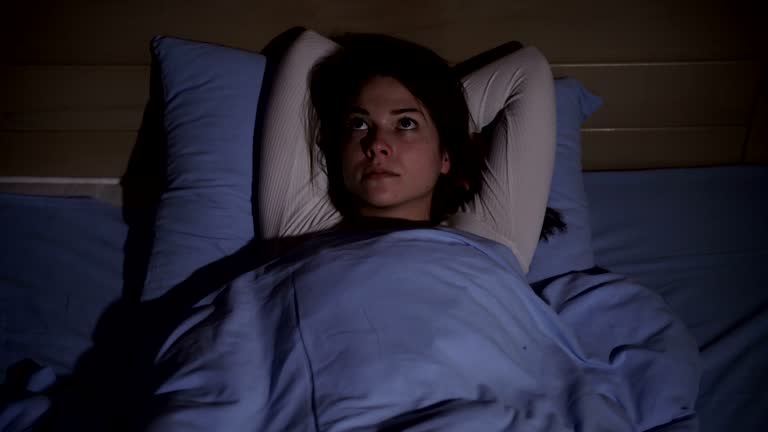
Three in the morning. You have been staring at the ceiling for an hour. You have counted sheep, tossed and turned, picked up your phone and put it down again. You know you will be exhausted tomorrow, and that thought — paradoxically — wakes you up even more. If this scene sounds familiar, you are not alone: according to the Spanish Society of Neurology, between 20 and 48% of the adult population in Spain experiences difficulty falling or staying asleep at some point in life, and around 10% suffer from chronic insomnia.
But insomnia is not simply “sleeping badly”. It is a symptom. And like any symptom, it has causes — some obvious, others far less so. Many people are unaware that, in certain cases, persistent insomnia can be an early signal that something is happening in the brain.
In this article we break down the types of insomnia, its most frequent causes, its connection to neurological health and the treatment options that go beyond a sleeping pill.
What is insomnia and when is it considered chronic?
Insomnia is a persistent difficulty in falling asleep, staying asleep or achieving restorative sleep, despite having suitable conditions for sleep. It is not about a single sleepless night before an exam or an important meeting: that happens to everyone and is of no particular significance.
The problem appears when the difficulty recurs.
Acute insomnia is the kind that lasts less than three months and is usually linked to an identifiable stress factor: a change of job, a personal conflict, a trip with jet lag. It generally resolves when the trigger disappears.
Chronic insomnia, by contrast, is defined as a difficulty sleeping that occurs at least three nights a week for three months or longer. At this level, insomnia stops being an inconvenience and becomes a health problem with real consequences: cognitive decline, increased cardiovascular risk, a weakened immune system, anxiety, depression and a significant impact on quality of life.
Types of insomnia: onset, maintenance and early awakening
Not all types of insomnia are the same, and distinguishing between them helps identify the underlying cause.
Onset insomnia: I can’t fall asleep
The best known. You get into bed and 30, 45, 60 minutes go by without your falling asleep. The mind switches on precisely when it should be switching off: you replay the day just passed, anticipate the next one, think about what you said or did not say. This type of insomnia is often linked to anxiety, stress and excessive activation of the sympathetic nervous system in the hours before sleep.
Maintenance insomnia: I wake up in the middle of the night
Falling asleep is not the problem; the problem is staying asleep. You wake up once, twice, three times a night and cannot get back to sleep for a long time. The awakenings may last minutes or stretch into hours, breaking sleep into a mosaic of micro-naps that provide no rest.
Maintenance insomnia is often linked to medical causes — chronic pain, sleep apnoea, gastro-oesophageal reflux, restless legs syndrome — as well as to mood disorders such as depression.
Early awakening: I wake at 3–4 and can’t get back to sleep
This is perhaps the least discussed, but one of the most exhausting. You fall asleep without difficulty, but at 3 or 4 in the morning you open your eyes and, however hard you try, you cannot get back to sleep. You are tired, but your brain has already revved up.
This pattern is especially closely linked to depression. In fact, early awakening is one of the classic symptoms of major depressive disorder. It can also be linked to circadian rhythm disturbances, especially in older people.
The main causes of insomnia
Insomnia rarely has a single cause. Usually several factors converge. Here are the most significant.
Stress, anxiety and worries
The most frequent cause of acute insomnia and one of the main ones in chronic insomnia. When the brain perceives a threat — real or imagined — it activates the alarm system: it releases cortisol and adrenaline, raises the heart rate and keeps the mind in a state of hypervigilance incompatible with sleep.
The problem is that modern stress is usually not a one-off danger you can flee from, but a sustained pressure: workload, financial worries, family conflicts. This constant activation does not “switch off” at bedtime. The anxious brain keeps running at full power when the body needs to rest.
Depression and mood disorders
The link between insomnia and depression is two-way. Depression causes insomnia — especially early awakening and difficulty staying asleep — and prolonged insomnia significantly increases the risk of developing depression. It is a circle that, without intervention, tends to get worse.
Bipolar disorders, dysthymia and generalised anxiety disorder also profoundly disrupt the architecture of sleep.
Poor sleep habits
Sometimes the problem is not in the brain or the emotions, but in what we do (or do not do) before sleeping. The screens of phones and tablets emit blue light that suppresses the production of melatonin, the sleep hormone. An irregular schedule throws off the biological clock. Caffeine after 2 p.m., alcohol as a “relaxant” (which actually fragments sleep), heavy dinners, intense exercise late in the evening… These are all factors that sabotage rest.
Medical causes: chronic pain, medication, hormonal disturbances
Pain — joint, muscular, neuropathic — is one of the most frequent causes of night-time awakenings. Some medications (antihypertensives, corticosteroids, certain antidepressants, bronchodilators) have insomnia as a side effect. And hormonal changes — menopause, hyperthyroidism, age-related melatonin deficiency — directly disrupt the regulatory mechanisms of sleep.
Insomnia as a signal of a neurological problem
Here it is worth paying special attention. Insomnia is not always “just” stress or bad habits. In some cases it is an early indicator that the brain is undergoing a degenerative process.
Sleep and the “cleaning” of the brain. During the deep phases of sleep, a mechanism called the glymphatic system is activated: a network of channels that “washes” the brain, removing the metabolic waste accumulated during the day. Among this waste is the protein beta-amyloid, whose excessive accumulation is linked to Alzheimer’s disease. When sleep is insufficient or of poor quality, this cleaning is not completed properly and the waste builds up.
Insomnia as an early symptom of dementia. The evidence suggests that sleep disturbances may precede the clinical diagnosis of Alzheimer’s disease and other dementias by years. This does not mean that everyone with insomnia will develop Alzheimer’s — far from it — but chronic insomnia in an older person, especially if accompanied by frequent forgetfulness or subtle cognitive changes, warrants a neurological assessment.
The cognitive consequences of prolonged insomnia. Even in the absence of a neurodegenerative disease, persistently poor sleep impairs cognitive functions. Working memory, the capacity for attention, information-processing speed and decision-making suffer after just one bad night. When it becomes chronic, the effect can be considerable.
I sleep, but I don’t rest: when the problem is not the amount of sleep
“I sleep eight hours and get up as if I hadn’t slept.” This is a more frequent complaint than it seems, and it points to a problem of quality, not quantity.
Sleep has a precise architecture: it is organised into cycles of about 90 minutes that alternate light phases, deep phases and the REM phase. Each one performs its own function. The deep phase is the most restorative on a physical and cerebral level; REM is essential for consolidating memory and regulating emotions. If these cycles are fragmented — by micro-awakenings, apnoea, periodic leg movements or simply by sleep that is too shallow — you may spend many hours in bed without getting real rest.
If you sleep enough but do not feel rested, the problem deserves investigation. A sleep study (polysomnography) can identify the causes of this fragmentation and guide treatment.
What to do if you can’t sleep? Evidence-based strategies
Before resorting to medication, there are interventions that the evidence base supports as a first line of treatment.
Sleep hygiene: what really works
The concept of sleep hygiene has been heavily popularised, but it is often reduced to generic advice that barely touches the heart of the matter. The rules that really make a difference, according to the clinical literature, are these:
-
A fixed schedule. Go to bed and get up at the same time every day — including weekends. The biological clock needs regularity to work.
-
Real darkness. The bedroom should be completely dark. Any source of light — including the light of an alarm clock — interferes with melatonin production.
-
A cool temperature. Between 18 and 20 °C is the optimal range. The body needs to lower its core temperature in order to initiate sleep.
-
Zero screens for 60 minutes before bed. Not 30 minutes, not “night mode”. The cognitive stimulation from social media, news and messages is just as harmful as the blue light.
-
The bed is for sleeping only. No working, eating, watching series or using the phone in bed. The brain must associate this space exclusively with sleep.
-
If you don’t fall asleep within 20 minutes, get up. Lying in bed tossing and turning generates anticipatory anxiety that worsens insomnia. Leave the bedroom, do something calm in dim light, and return when you feel sleepy.
When to see a specialist
Sleep hygiene is necessary, but not always sufficient. See a specialist if:
-
Insomnia persists for more than three months despite proper adherence to the rules.
-
You feel exhausting fatigue during the day.
-
You have been told that you snore loudly or stop breathing during sleep.
-
The insomnia is accompanied by mood swings, forgetfulness or difficulty concentrating.
Treating insomnia: beyond sleeping pills
Sleeping pills and benzodiazepines have their place in one-off situations, but they are not the solution for chronic insomnia. They are habit-forming, can lead to dependence and, paradoxically, worsen sleep quality in the long term by disrupting its natural architecture.
Cognitive behavioural therapy for insomnia (CBT-I). This is the reference treatment for chronic insomnia according to international clinical guidelines. It does not use medication: it is based on restructuring the thoughts and behaviours that sustain insomnia. Studies show that CBT-I is more effective than medication in the long term and that its effects persist after treatment ends.
Neuromodulation and brain stimulation. When insomnia is part of a broader picture — cognitive decline, degenerative brain changes or the after-effects of trauma — treating only the sleep symptom is not enough. The underlying cause must be addressed.
TPS therapy (transcranial pulse stimulation) acts precisely at this level. By means of focused acoustic pulses, it stimulates specific brain regions, promoting the formation of new blood vessels, improving neuronal communication and optimising cerebral blood flow in the areas involved in regulating the sleep-wake cycle. In patients who have undergone TPS treatment at Clínica Revita, improved sleep is one of the most frequently reported results, along with improvements in attention and memory.
The treatment is outpatient (six sessions of 30 minutes over two weeks), painless and can be combined with other methods — both pharmacological and behavioural.
Is your insomnia not going away and are you worried about your brain health?
At Clínica Revita (Barcelona) we carry out complete neurological evaluations to determine whether your insomnia has a neurological component, and we offer access to TPS brain stimulation therapy with NEUROLITH — a treatment that acts on the deeper causes of insomnia linked to a decline in brain function.
📞 Call us at +34 624 00 6244 or visit us at Carrer de Santaló, 105, 08021 Barcelona.